Most people who retire to Destin and 30A come for the sand and a relaxed pace. We plan carefully for the things we can picture: the boat, the grandkids' visits, the screened porch. The expense almost nobody plans for is the one I see derail the most retirements, and it hits at exactly the wrong time. Let's be honest, long-term care planning is depressing. We love planning the fun things and avoid the grim ones. I'd offer a different way to look at it. Plan for the goal, not the event. Honestly, I've found the months spent planning a vacation more fun than the vacation itself. Do this for the same reason: the peace of mind that lets you enjoy the fun things without this hanging over you. Retire from the stress of not having a plan.
Think it won't happen to you? The odds are not on your side. Roughly seven in ten Americans turning 65 today will need some form of long-term care, according to the federal Administration for Community Living. About one in five will need it for five years or longer, and women average 3.7 years of paid help with daily activities. Close to one in five people turning 65 will spend more than $200,000 on care over their lifetime.
That is the gap that quietly drains beach retirements. It is also the most plannable risk most families never address.
Long-Term Care Costs in Northwest Florida for 2026
The Panhandle is kinder on price than most of the country. It is not cheap.
Here in the Crestview-Fort Walton Beach-Destin area, costs run under the rest of Florida, though not by as much as people hope. The most rigorous source on this, the Genworth/CareScout Cost of Care Survey, puts assisted living in our metro around $3,125 a month, home health care near $4,576, and a semi-private nursing home room at about $8,517. Those are 2024 medians, and they've been climbing roughly 5 percent a year since. They're also blended across the whole metro. At the coastal communities in Destin and Miramar Beach, assisted living more realistically runs $4,500 to $4,900 a month, and memory care runs higher because it takes more staff to deliver safely.
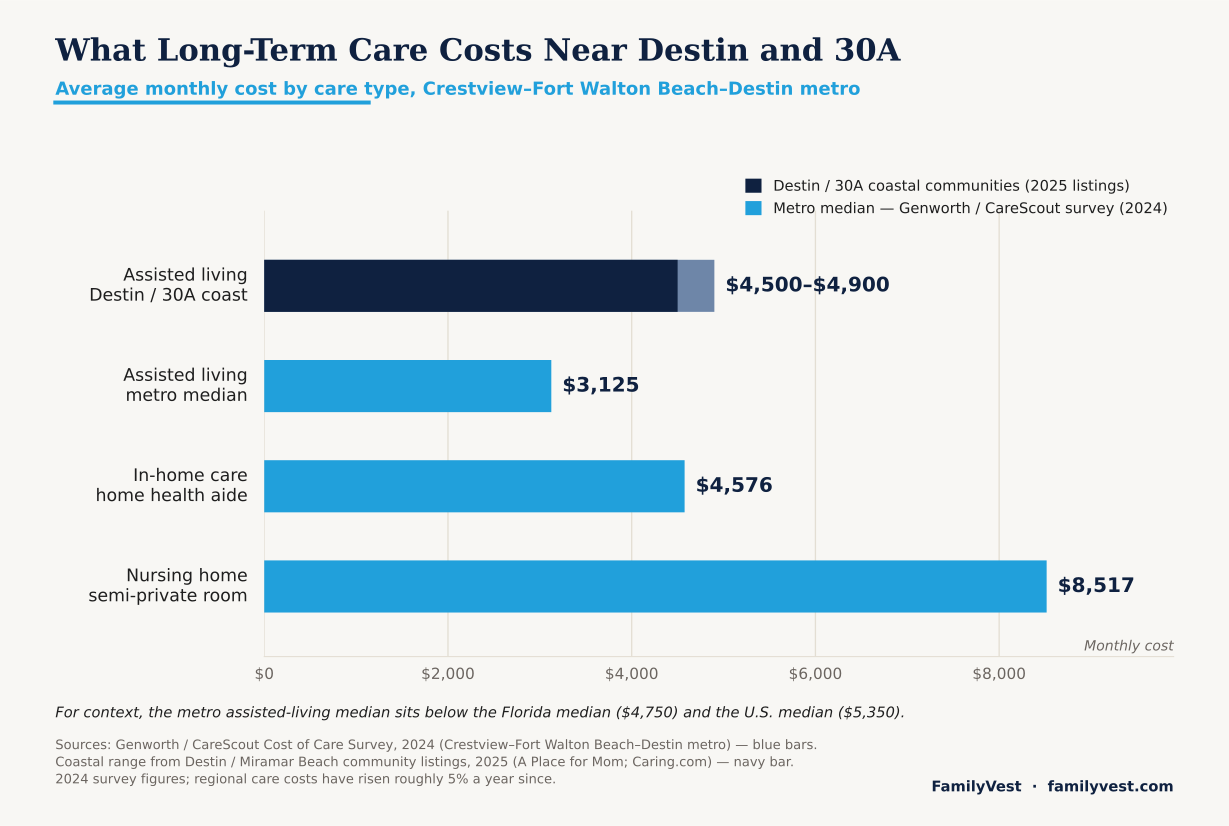
Nursing home care is where the math turns serious. The Florida Health Care Association and Medicaid Planning Assistance put a semi-private room in Florida around $9,885 a month for 2026, and a private room between $11,406 and $11,905. At the high end, that is more than $142,000 a year, and forecasters expect 3 to 5 percent annual increases for the rest of the decade.
Two things are true at once. Northwest Florida costs less than Naples or South Florida. And it is still expensive enough to consume an entire middle-class portfolio in three or four years.
Medicare Will Not Cover This
This is the assumption I correct most often. Couples I meet around Gulf Breeze and Fort Walton Beach are surprised to learn Medicare does not pay for nursing home or assisted living stays.
Medicare and Medicare Supplement plans cover acute and skilled medical care. Long-term care is mostly custodial: help with bathing, dressing, eating, and moving from a bed to a chair. Medicare specifically excludes that kind of help.
There is one narrow exception. After a qualifying hospital stay, Medicare covers up to 100 days of skilled nursing per benefit period. The patient pays $217 a day in coinsurance from day 21 through day 100 in 2026 unless a Medigap policy covers it, and the benefit ends at day 100 no matter what. That is rehab coverage, not long-term care. Room and board in an assisted living facility is not covered at all.
Three Funding Paths for the Panhandle Retiree
Once Medicare is off the table, three real options remain. The right one depends on your assets, your health, and what you want to leave behind.
1. Long-Term Care Insurance
Traditional long-term care insurance is imperfect, but for the right buyer it is still the cleanest way to transfer this risk to someone else's balance sheet. At age 60 in 2026, a healthy man pays roughly $1,200 to $2,610 a year for a three-year benefit period with a 3 percent inflation rider. A healthy woman the same age pays $1,900 to $4,550, because women tend to use the benefit longer. Couples often save 20 to 40 percent with a shared-care rider.
Hybrid policies that combine life insurance with long-term care have largely replaced standalone coverage for affluent buyers, mostly because they return premiums or pay a death benefit if the care is never needed. You pay more up front for that. Whether it is worth it comes down to your liquidity, your health, and whether your family needs the death benefit.
2. Self-Funding With a Bucket Strategy
Families with $2 million or more in investable assets often decide to carry this risk themselves. That can work, but only with discipline. The piece people skip is setting the money aside on purpose. I generally want clients to hold 24 to 36 months of expected care costs in a conservative reserve. It does not have to be formally segregated, but walling it off from the money you actually live on adds a layer of safety. Without that separation, a sudden health event forces you to sell assets at a time not of your choosing.
Business owners may use a deferred compensation plan or properly structured permanent life insurance as both a care reserve and an estate planning tool.
3. Medicaid Planning Done Early
Florida Medicaid will cover nursing home care, but only for those who meet strict income and asset limits. The catch is the five-year look-back on asset transfers, which means real Medicaid planning has to start years before anyone needs care, not in the middle of a crisis. A good elder law attorney in northwest Florida can put the right tools in place when they fit: irrevocable trusts, qualified income trusts, and lady bird deeds.
Veterans Have an Underused Lever: VA Aid and Attendance
If you served at least 90 days of active duty with at least one day during a wartime period, you may qualify for the VA's Aid and Attendance enhanced pension, which went up 2.8 percent for 2026.
A married veteran who needs help with daily activities can receive up to about $2,874 a month in 2026. A single veteran can receive up to $2,424, and a surviving spouse up to $1,558. Those are tax-free dollars, and they follow the veteran wherever care happens, at home or in a facility.
The 2026 net worth limit to qualify is $163,699, which counts most assets but not your primary home. I see veterans across the Emerald Coast assume their pension or disability rating rules them out. Often it does not. A simple free benefits review through the VA or an accredited claims agent can allow time for planning. Structuring your situation around the rules can take advantage of your earned benefits.
Special Needs Families Face a Parallel Problem
I plan for this one personally, not just professionally. Both of my sons have autism, so I understand the question that sits underneath every other decision: what happens to my child when I am no longer here to manage it?
If you care for a child or sibling with a disability, your long-term care plan is not only about you. It has to outlive you, and it has to do so without accidentally costing your loved one their benefits. A properly drafted special needs trust holds assets for them without disqualifying them from Supplemental Security Income or Medicaid. A Florida ABLE United account lets up to $20,000 a year in 2026 grow tax-free for qualified disability expenses. Pair the two, add a clear letter of intent and a named successor trustee, and you have the foundation of a plan that protects both generations at once.
The Bottom Line for Northwest Florida Retirees
The real cost of avoiding this conversation is not measured in premiums. It shows up as a surviving spouse selling the home you bought near the water, or a child with a disability losing benefits because the trust was never documented. The question is not whether to plan. It is which of these paths fits your numbers, and your family, and the answer is a lot easier to reach before care is needed than after.