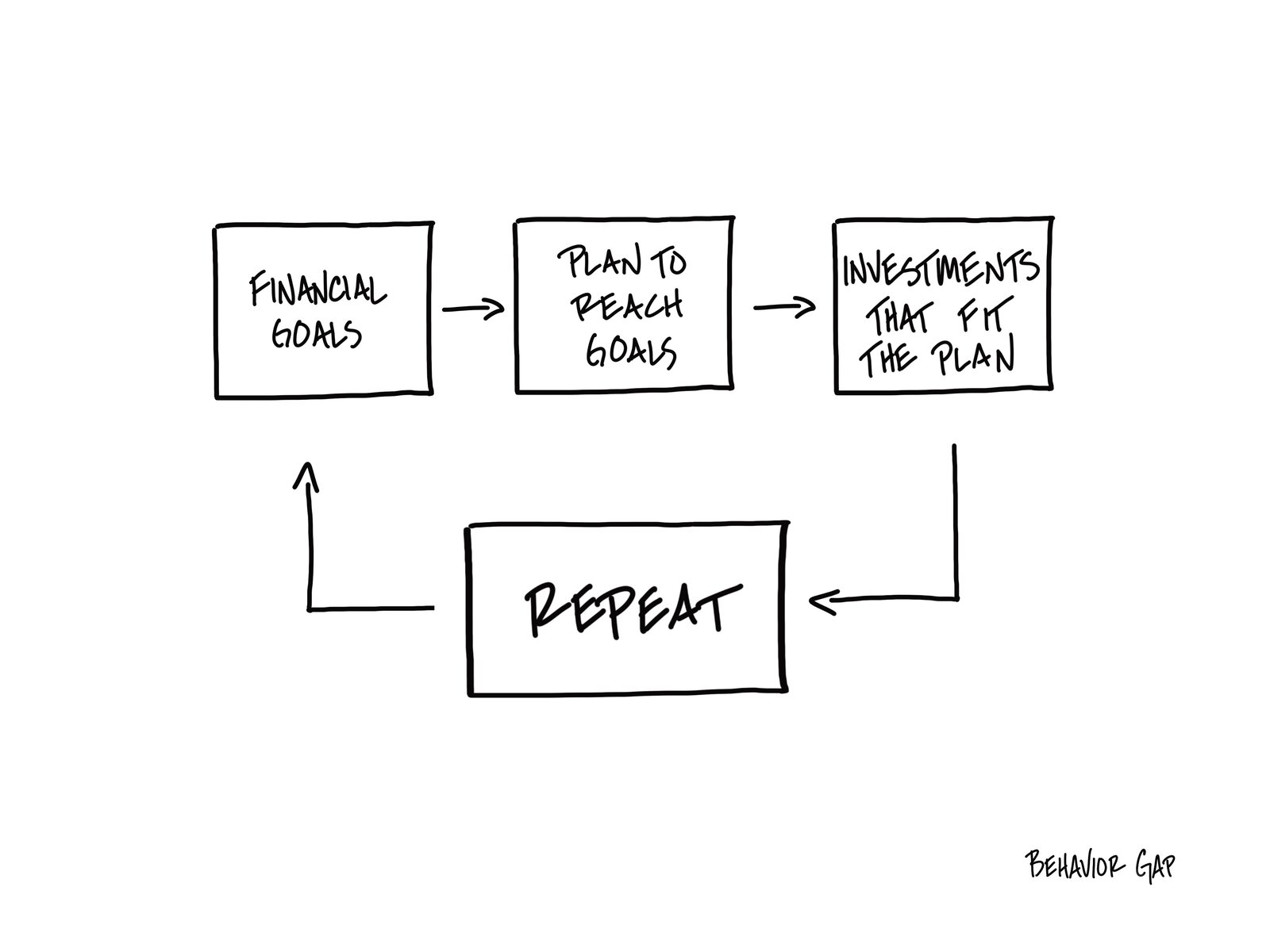
Studies suggest that up to 92% of people who set goals fail to achieve them. That is a staggering number, and it raises an obvious question: if nearly everyone fails, is the problem the people or the goals?
In my experience working with families on their financial plans, it is almost always the goals. Not that they are bad goals in the abstract. They fail because they are disconnected from what the person actually cares about. A goal you set because you feel like you should is a goal you will abandon as soon as things get hard.
The fix is not more discipline. It is a better process for choosing goals in the first place.
Start with Why, Not What
Before you set a savings target or a retirement number, ask yourself why you want it.
Say you want to save $50,000 for a down payment. That sounds reasonable. But have you asked why? If the honest answer is that your parents expect you to buy a house, or you read that renting is "throwing money away," you may be chasing someone else's version of success.
Maybe you love where you live. Maybe you value flexibility more than equity. There is nothing wrong with renting, and there is nothing wrong with buying. But the goal needs to be yours.
When you understand the why behind a goal, you can tell the difference between something worth sacrificing for and something that will quietly drain your motivation until you stop trying.
Identify Your Core Values
If asking "why" tells you what to stop pursuing, identifying your values tells you what to pursue instead.
Core values are the things that define who you are and how you make decisions. They do not change day to day. Adventure, security, creativity, family, independence, service: these are the kinds of values that drive lasting behavior change.
Most people have never written theirs down. If you haven't, start by picking three to five values that feel non-negotiable. Not aspirational. Not what you think you should value. What you actually value when no one is watching.
Once you know your values, you have a filter for every financial decision you make.
Connect Values to Goals
This is where the process gets practical. You know your values. You know to ask why. Now connect them.
If one of your values is creativity, a goal like building a line item in your budget for art classes or a workshop trip makes sense. You will protect that spending because it reflects something essential to you.
If adventure is a core value, saving for a year of family travel makes more sense than saving for a bigger house. The numbers might be similar, but your relationship to the goal is completely different.
The more important something is to you, the more likely you are to stick with the work required to achieve it. Goals that connect to values create their own motivation.
Make It Specific and Measurable
Values-driven goals still need structure. "Save for emergencies" is a wish. "Save $10,000 in an emergency fund by December by transferring $1,667 per month to a high-yield savings account" is a plan.
Every goal should be specific enough that you know exactly whether you have achieved it or not. It should be measurable, actionable, realistic, and time-bound.
The realistic part matters. If $50 at the end of the month is a stretch, $1,667 is not a plan. It is a fantasy that will make you feel worse when you miss it. Start where you are, not where you wish you were, and adjust the timeline or the target to match reality.
Build In Accountability
Motivation fades. Every long-term goal outlasts the initial burst of enthusiasm that created it. This is not a character flaw. It is how human beings work.
The solution is external accountability. A partner, a friend, a group, or a professional who checks in on your progress and asks the uncomfortable questions when you drift.
A good financial planner is not someone who hands you a plan and wishes you luck. They walk alongside you, review progress, flag when you are off track, and help you adjust when life changes the equation. That ongoing relationship is often the difference between a goal achieved and a goal abandoned.
You do not need to do this alone. A support system is not a crutch. It is a core part of the process.
The path from goal-setting to achievement depends on connecting what you want to achieve with what actually matters to you. Whether you are building emergency savings, working to spend less than you earn, or defining broader financial goals, the process starts with values.
Start a conversation with us to discuss your goals and build a plan around what matters most. Or learn more about comprehensive financial planning.