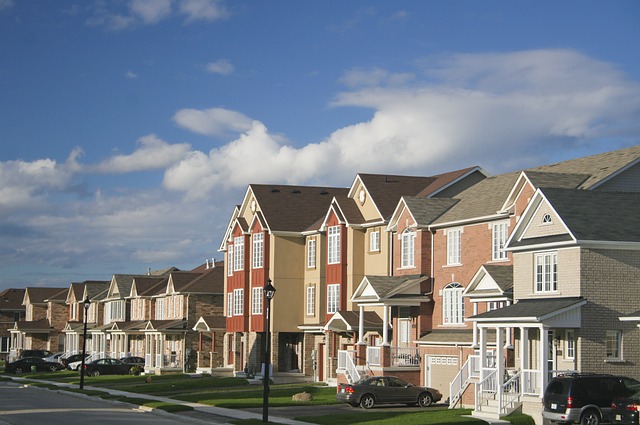
Purchasing a home or condo is about more than an interior space and four walls. It also means possibly getting yourself into a living situation involving a homeowner association (HOA) structure.
A homeowner association is for homeowners who own their lots and homes, explains REMAX Infinity. The association is intended to maintain the common spaces, preserve property values and, in limited cases, resolve neighborly disputes.
HOAs often have strict covenants and rules regarding everything – from the color of your house paint to your landscaping. As a smart buyer, it’s imperative to scrutinize the homeowner association documents to know what exactly you’re getting yourself into before you buy a home.
With the current COVID-19 situation, most HOAs are implementing new rules for a period of time. The rules, most notably social distancing, mainly apply to meetings, community events, and other social gatherings.
However, as with everything else, each HOA is reacting differently to the virus. Some may keep their public amenities like pools, fitness centers, golf courses, parks, and other community areas open, while others have closed them. That’s why it’s best to always check with your own HOA about their covenants and rules.
In today’s article, you’ll learn everything you need to know when it comes to homeowner’s associations.
1. Understand what insurance coverage the HOA provides.
Just like property ownership, insurance within a planned development can also be shared. With the homeowner covering some areas or perils and the HOA being responsible for others.
Often, these are sanctioned by the local statutes. Let’s take Florida, for example. Homeowners in Florida are responsible for insuring all of their personal belongings within their property. That may include things like window treatments, cabinetry, flooring, appliances, and the like.
Meanwhile, the condominium homeowner’s association on their part takes up the role of insuring all common property.
As different states have different laws, check up on your state laws. And then, check whether the HOA you are considering is adhering to those requirements.
If you are considering purchasing a property in a disaster-prone area, check to see whether your HOA offers catastrophe insurance. Examples of such disasters include hurricanes, tornadoes, wildfires, blizzards, earthquakes, and floods.

2. Ensure the home you intend to buy is HOA compliant.
If you are interested in a home that belongs to an HOA, do proper diligence before signing on the dotted lines. More specifically, have the home inspected by a professional before buying it.
Why? Because any lingering issues that you may end up inheriting could come to haunt you later in the form of fines. A few of the things to be in the lookout for include house design changes, illegal rentals, flaking paint, and overgrown landscaping.
HOAs require that homeowners seek their approval when it comes to some crucial property changes or developments.
3. Get to know the reputation of the HOA.
Primarily, HOA serves as a hyper-local government for the community. It, therefore, pays to look into how it runs.
While volunteer residents run some homeowner associations, some are managed entirely professionally. If a private company operates the HOA, make sure to investigate its reputation first before buying a property there.
If the association employs some employees or hires firms to do specific tasks, make sure to ask about these and the work they do.
If you can, talk to the current owners of the property you intend to buy from. Preferably, they should not hold any role in the running of the HOA and should have lived in the property for several years.
What you want to be in the lookout for are indications of various drama. HOAs, just like other governing bodies, can be hampered by petty politics, power plays, and egotism.
You also want to schedule a time to speak with any of the HOA board members. Ask them the following questions.
- Do we have to keep a particular color of paint for any part of the house?
- Are there any current litigations pending involving the HOA?
- Are there restrictions for commercial vehicles?
- Can I store my boat or RV on the premises?
- Does the HOA allow home businesses?
- Are there age restrictions?
- Can you plant flowers?
- How many parking spaces are allotted?
- Are guests allowed in the community pool?
- Is the HOA development FHA approved?
- Have homeowners been assessed for repairs in the last five years? Ten years?
- Are exterior alterations to the house allowed?
- Is there guest parking, and where is it located?
- Are holiday decorations allowed?
- Are there pet restrictions?
4. Understand how the HOA manages conflicts.
Disagreements, as in any community, are usually commonplace in a planned development. And occasionally, over individual residents breaking or bending the rules. Before making any decision to buy, get to know how standards are set and enforced, and what consequences rule-breakers are imposed.
In some HOAs, sanctions can be strict. The outcomes may include getting sued or fined or even having a lien placed on your home. You may also want to know whether the association can foreclose on your property for “covenants, conditions, and restrictions ” (CC&R) violations.
Also, familiarize yourself with the conflict resolution process, as well as how the association manages rule additions and amendments.

5. Understand the rules and covenants.
Often, the rules and regulations of a particular HOA are unique. As such, don’t rely on previous experience or second-hand information to understand your HOA’s rules and regulations.
While each community has its own set of CC&Rs, some are pretty common and important to follow regardless of where you live. They include:
- Design changes: Almost all HOAs have rules requiring homeowners to maintain the original design of their property. This may, therefore, make it illegal to do things like add a patio, add a deck to the home, or paint your home a different color.
- Exterior storage: Most HOAs have rules on types of storage you can have or not have as well as what you can and cannot store outside your home.
- Noise: Many HOAs have rules regarding noise. They will usually have hours when noise is allowed and when it requires to be limited.
- Holiday decorations: Most HOAs also have regulations regarding the size of holiday decorations and how elaborate they can be. Leaving your lights up long after the holiday season is over, for instance, may constitute an infraction.
- Trash: HOAs also have limits about waste management. These include rules on what you can dispose of in community dumpsters as well as rules on when you can take out your trash cans and bring them back in.
- Pets: There will likely be rules about pets in the HOA you are considering. For example, what kind of pets you can own, how many pets you can own, and whether you have to leash your pet.
- Vehicles: Many HOAs will also have rules related to cars. These include what type of vehicles you can have, where you can park them, and how many you can have. There may also be limits on boats, RVs, commercial vehicles, and more.
- Rentals: This is arguably one of the most essential rules you need to know about. Some HOAs will not allow you to rent out your home. Verifying the rules surrounding rentals can help you avoid potentially costly fines and legal problems.
- Maintenance standards: In an HOA, as a homeowner, you will need to maintain your property’s curb appeal. It’s not usually acceptable to disregard routine maintenance (like mowing and watering the lawn), as it ruins the neighborhood’s aesthetics.
- Fee obligations: Living in an HOA comes at a cost. As a homeowner living in a community, you should be prepared to pay dues. These dues will help your HOA maintain what they deem to be acceptable living conditions.
Once you have read up on these rules, think carefully about whether they are acceptable to you or if they are not. If they are, that is great. But if not, then seriously consider buying elsewhere.
Often, these CC&Rs will be available online at the community’s website. But if they aren’t, ask your agent for help. You also want to make sure that the copy you have is up-to-date before immersing yourself deep into the buying process.
6. Understand the impact of the HOA dues on your finances.
As already aforementioned, HOAs come at a cost. As such, find out how the fees will impact your finances, specifically how the fees will impact your mortgage approval. Remember, banks will factor in your monthly HOA fees when deciding how large a mortgage you are most likely to afford.
Higher HOA fees will mean that you will be left with a smaller approved amount to spend on your next house.
7. Know what your HOA is precisely responsible for.
Just like fees vary from one community to another, find out the exact rights, services, and amenities for which your HOA is responsible for.
For some, gate maintenance may be the only agreement between homeowners. And for others, there may be an HOA in place with legal authority to manage so much more.
As such, take time to find out what the HOA you are interested in buying a home in is responsible for. Do they arrange for inspections? Do they organize maintenance and upkeep? Are they accountable for garbage pickup? Are utilities included? What about the internet and cable service?
8. Get to know how much the HOA will cost you in fees.
Fees differ for many reasons. They could vary due to the size and number of development’s amenities, the age of the building, and even within the development of things like location, square footage, and orientation. According to a study by Trulia, monthly fees in 2015 averaged $331 a month. These ranged from about $218 a month in Warren, Michigan to as much as $551 in New York City.
Homeowners associations are becoming commonplace these days. This means that investors and homeowners alike need to become more aware of what they are buying into. Understanding your HOA’s rules will help you know how your life will get impacted once you begin living in the community.
To read more on various financial topics like these, visit our blog!
If you would like to schedule a complimentary discovery meeting, contact us today.
Farther-FamilyVest is your local Fiduciary Financial Advisor in Destin and fiduciary financial advisor on 30A!